-
By:
- elizabeth
- No comment
machine screw size chart pdf
Machine Screw Size Chart PDF: A Comprehensive Guide
Navigating machine screw dimensions requires detailed charts, often available as PDFs, encompassing metric and imperial sizes.
These resources detail tap, clearance, and Accu Metric specifications for precise applications.
Machine screw sizes are standardized for interchangeability, crucial in assembly processes across diverse industries. Understanding these sizes—detailed in readily available PDF charts—is paramount for successful projects. These charts categorize screws by diameter, thread pitch, and length, utilizing both metric (M1, M1.2, etc.) and imperial (#0, #1, #2) systems.
PDF resources consolidate this information, offering quick reference for selecting the correct fastener. They often include tap drill size charts to prepare threaded holes and clearance drill charts for unobstructed passage. Accurate selection prevents damage to components and ensures secure fastening. Furthermore, charts specify materials and applications, aiding in optimal screw choice for various environments and loads.
Understanding Screw Thread Standards
Screw thread standards, like Unified National Fine (UNF-2A), dictate the geometry of screw threads, ensuring compatibility between screws and their corresponding nuts or tapped holes. Machine screw size charts, often in PDF format, detail these standards, specifying thread pitch (threads per inch or millimeter) and diameter.
These charts are essential for engineers and technicians, as mismatched threads can lead to assembly failures. Understanding thread type is critical; for example, UNF-2A threads have a finer pitch than standard UNC threads. PDF guides also clarify nominal screw diameters and grip lengths, vital for secure fastening. Accurate interpretation of these standards, as presented in the charts, guarantees proper functionality and structural integrity;
Metric Machine Screw Sizes
Metric machine screws, widely used globally, are defined by their diameter in millimeters (e;g., M1, M1.2, M1.4, M1.6, M2). Comprehensive machine screw size charts, frequently available as PDFs, provide detailed dimensions for each size, including thread pitch and major diameter.
These charts are crucial for selecting the correct screw for a given application, ensuring proper fit and functionality. PDF resources often include tables listing dimensions for various lengths within each metric size. Accurate referencing of these charts prevents assembly errors and ensures optimal performance. Understanding the M designation and associated dimensions is key to successful metric screw selection.
M1 Screw Dimensions
The M1 screw, a small metric fastener, requires precise dimensional understanding for successful application. Machine screw size charts, often in PDF format, detail its specifications. The diameter is 1mm, with a typical pitch of 0.25mm. These charts outline the major diameter, minor diameter, and thread depth.
Selecting the correct tap drill size is critical; charts recommend a 0.8mm tap drill for creating threads. Accurate dimensions ensure compatibility with corresponding nuts and tapped holes. PDF resources provide comprehensive tables for M1 screws of varying lengths, aiding in precise component assembly and preventing thread damage.

M1.2 Screw Dimensions
The M1.2 screw, another small metric fastener, demands careful attention to its dimensions, readily available in machine screw size chart PDFs. Its nominal diameter is 1.2mm, commonly paired with a 0.25mm pitch. Detailed charts specify the major, minor, and effective thread diameters for accurate calculations.
Crucially, selecting the appropriate tap drill size – typically 1.0mm according to available resources – is vital for creating properly formed threads. PDF guides offer comprehensive tables listing dimensions for various M1.2 screw lengths, ensuring compatibility and preventing issues during assembly. These charts are essential for precision engineering and repair work.
M1.4 Screw Dimensions
The M1.4 machine screw, a frequently used small metric fastener, requires precise dimensional understanding, best accessed through comprehensive machine screw size chart PDFs. This screw features a nominal diameter of 1.4mm, often coupled with a 0.3mm pitch. Detailed charts outline the major, minor, and effective thread diameters for accurate design and manufacturing.
Selecting the correct tap drill size – generally 1.2mm as indicated in available resources – is paramount for creating clean, functional threads. PDF guides provide extensive tables detailing dimensions for various M1.4 screw lengths, ensuring optimal fit and preventing assembly problems. These charts are invaluable for both professional engineers and DIY enthusiasts.
M1.6 Screw Dimensions
The M1.6 machine screw, a common metric fastener, demands precise dimensional data, readily available in detailed machine screw size chart PDFs. This screw boasts a nominal diameter of 1.6mm, frequently paired with a 0.35mm pitch. Comprehensive charts delineate the major, minor, and effective thread diameters, crucial for accurate engineering and production processes.
Proper tap drill size selection – typically 1.4mm according to referenced charts – is vital for creating robust, functional threads. PDF resources offer extensive tables specifying dimensions for various M1.6 screw lengths, guaranteeing optimal fit and preventing assembly issues. These charts are essential tools for professionals and hobbyists alike, ensuring project success.
M2 Screw Dimensions
The M2 machine screw, a frequently utilized metric fastener, requires precise dimensional information, conveniently found within comprehensive machine screw size chart PDFs. Featuring a nominal diameter of 2mm, it commonly employs a 0.4mm pitch. Detailed charts outline critical thread diameters – major, minor, and effective – essential for accurate design and manufacturing.
Selecting the correct tap drill size, generally 1.8mm as indicated in available resources, is paramount for creating reliable threads. PDF charts provide extensive tables detailing dimensions for various M2 screw lengths, ensuring a secure and functional assembly. These resources are invaluable for both professionals and DIY enthusiasts, guaranteeing project integrity and efficiency.
Imperial/Standard Machine Screw Sizes
Understanding imperial or standard machine screw sizes necessitates referencing detailed charts, often available in PDF format. These charts catalog a range of screw numbers, starting from #0 and progressing upwards, each with specific diameter and thread pitch characteristics. Unlike the straightforward metric system, imperial sizing involves fractional inch measurements, demanding precise interpretation.
PDF resources provide crucial data, including thread counts per inch (TPI) and recommended tap drill sizes for each screw number. Information on grip length and overall length is also vital for proper application. Accessing these charts ensures compatibility and prevents issues during assembly, particularly when repairing or restoring older equipment utilizing standard fasteners.
#0 Screw Dimensions

The #0 screw, a diminutive fastener within the imperial system, requires precise dimensional data for successful application. PDF charts dedicated to machine screw sizes reveal a nominal diameter of approximately 0.060 inches, coupled with a thread pitch of 32 threads per inch (32 TPI). Grip length, crucial for determining suitability, varies significantly based on the screw’s overall length.
PDF resources also specify recommended tap drill sizes – typically around 0.043 inches – to ensure proper thread engagement. Understanding the relationship between nominal size, thread type (.190-32 UNF-2A as an example), and length (e.g., 0.7500 inches) is paramount. These charts facilitate accurate selection for delicate assemblies or repair work.
#1 Screw Dimensions
The #1 screw, progressing in size from the #0, presents distinct dimensional characteristics detailed in comprehensive machine screw size charts, often available in PDF format. This screw typically boasts a nominal diameter of around 0.073 inches, paired with a 32 TPI thread pitch. Accurate grip length determination, vital for secure fastening, is clearly outlined in these downloadable guides.
PDF specifications highlight a recommended tap drill size of approximately 0.056 inches for optimal thread formation. Charts also delineate corresponding lengths and thread types, such as UNF-2A, ensuring compatibility. These resources are invaluable for repair applications and projects demanding precise fastener selection, aiding in avoiding mismatched components.
#2 Screw Dimensions
The #2 screw represents a further increase in size within the standard screw series, with detailed dimensions readily accessible in machine screw size chart PDFs. Typically, a #2 screw features a nominal diameter of approximately 0.086 inches, coupled with a 32 threads per inch (TPI) pitch. These charts are crucial for selecting the correct tap drill size, generally around 0.069 inches, to ensure proper thread engagement.
PDF resources specify grip lengths and overall lengths, vital for applications requiring specific fastening depths. Understanding UNF-2A thread specifications for this size is also detailed. These charts aid in accurate repair work and project builds, preventing issues arising from incompatible screw sizes and ensuring robust, reliable connections.
#3 Screw Dimensions
The #3 screw builds upon the standard series, offering increased strength and holding power, with precise dimensions detailed in comprehensive machine screw size chart PDFs. This size typically boasts a nominal diameter of around 0.099 inches, paired with a 40 threads per inch (TPI) pitch. Accurate tap drill size selection, generally around 0.079 inches, is critical for creating properly formed threads.
PDF charts outline grip lengths and overall lengths, essential for applications demanding specific fastening depths. Understanding UNF-2A thread specifications for this size is also readily available. These resources are invaluable for repair work and construction, ensuring compatibility and preventing issues caused by incorrect screw selection, leading to secure and lasting connections.
#4 Screw Dimensions
The #4 screw represents a common size within the standard machine screw series, frequently detailed in accessible machine screw size chart PDFs. It features a nominal diameter of approximately 0.110 inches, typically coupled with a 40 threads per inch (TPI) pitch. Selecting the correct tap drill size, generally around 0.089 inches, is paramount for achieving clean and robust threads.
PDF resources meticulously outline grip lengths and overall lengths, crucial for applications requiring specific fastening depths. Understanding UNF-2A thread specifications for this size is easily found within these charts. These documents are essential for repair projects and construction, guaranteeing compatibility and preventing failures due to improper screw choices, ensuring reliable and durable assemblies.
Screw Length Measurement
Accurate screw length determination is vital for successful fastening, and machine screw size chart PDFs provide clear guidance. Length is typically measured from the screw’s bearing surface – where it contacts the material – to the tip. Pan head screws, as detailed in these charts, are measured this way, accounting for the head’s height.
PDF resources illustrate the distinction between overall length and grip length; grip length is the portion extending through the materials being joined. Understanding this difference, often visually represented in charts, prevents issues like screws bottoming out or not providing sufficient clamping force. Precise measurements, aided by these charts, ensure secure and reliable connections in various applications.
Screw Head Types and Their Impact on Length
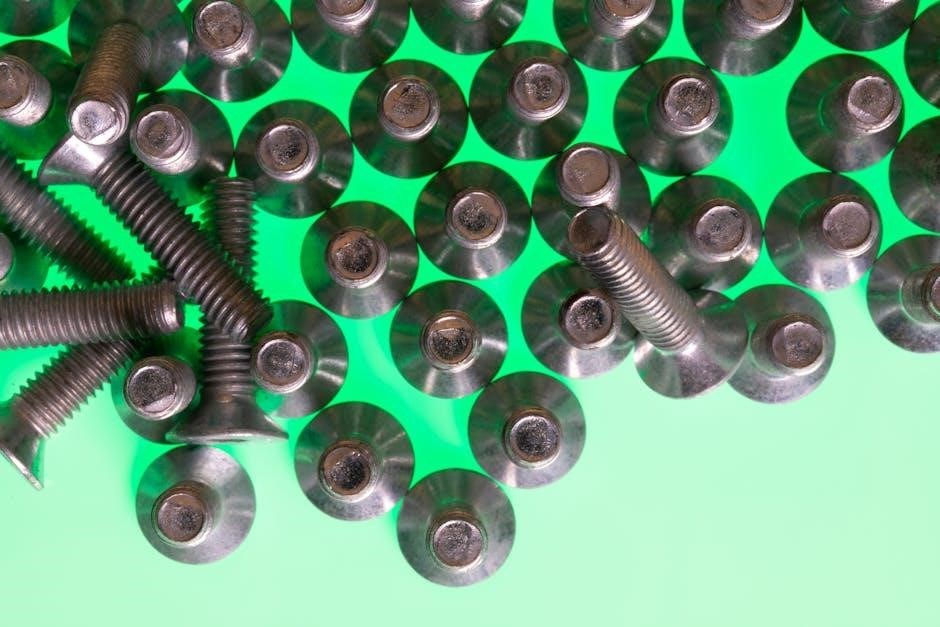
Machine screw size chart PDFs highlight how head type influences overall screw length considerations. Different head styles – like pan, flat, oval, and round – possess varying heights, directly affecting the total length needed for a secure fastening. Countersunk (flat) heads require length calculations accounting for the countersink angle to ensure a flush finish.
These charts often visually demonstrate how head height adds to the specified length. Selecting the correct length, considering the head type, is crucial to avoid protrusion or insufficient engagement. Detailed diagrams within the PDFs illustrate these nuances, aiding in accurate screw selection for diverse applications and material thicknesses.
Tap Drill Size Charts for Machine Screws
Machine screw size chart PDFs invariably include essential tap drill size charts. These charts correlate screw size (metric or imperial) to the appropriate drill bit size needed to create threads. Accurate tap drill selection is paramount for achieving strong, clean threads without damaging the screw or the tapped hole.
The charts detail recommended drill sizes for both standard and fine threads, accounting for thread pitch. Using the incorrect tap drill size can lead to stripped threads, weakened joints, or difficulty assembling components. PDFs often categorize charts by material type, offering tailored recommendations for steel, aluminum, and other materials.
Clearance Drill Size Charts for Machine Screws
Comprehensive machine screw size chart PDFs also feature crucial clearance drill size charts. These charts specify the drill bit size required for creating holes that allow the screw to pass through an unthreaded component freely. Proper clearance hole sizing prevents binding and ensures smooth assembly.
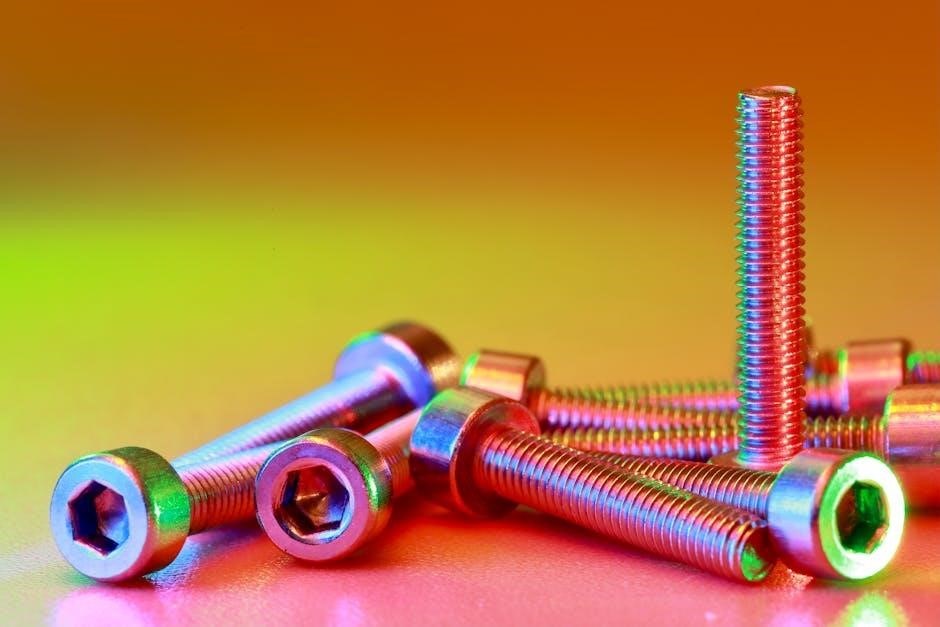
The charts are categorized by screw size and thread type, providing precise drill size recommendations. Selecting the correct clearance drill size is vital for avoiding damage to the screw threads or the surrounding material during installation. PDFs often include separate charts for standard and clearance holes, simplifying the selection process.
Accu Metric Screw Size Charts (PDF Availability)
Accu Metric screw size charts, frequently available in PDF format, offer detailed specifications for these precision fasteners. These charts are invaluable for engineers, machinists, and hobbyists requiring accurate dimensional data. PDFs provide a convenient, portable, and easily shareable resource for quick reference.
The charts typically include nominal diameter, thread pitch, major diameter, minor diameter, and other critical measurements. Downloading these PDFs ensures access to the latest specifications, aiding in proper screw selection and compatibility. Many suppliers offer downloadable charts directly from their websites, streamlining the process of finding the correct Accu Metric screw for any application.
Machine Screw Materials and Their Applications
Machine screws are manufactured from a diverse range of materials, each suited to specific applications and environments. Common materials include carbon steel, alloy steel, stainless steel, brass, and nylon. Carbon steel offers high strength but is susceptible to corrosion, making it ideal for indoor use.
Stainless steel provides excellent corrosion resistance, suitable for outdoor or marine environments. Brass is chosen for its machinability and aesthetic appeal, while nylon offers electrical insulation and low friction. Selecting the appropriate material, alongside referencing a machine screw size chart PDF, ensures optimal performance and longevity in any given application.
DIN 964 Countersunk Machine Screws

DIN 964 specifies countersunk head machine screws, designed to sit flush with the surface when installed. These screws feature a 90-degree countersink angle and are commonly used in applications requiring a smooth, finished appearance. A machine screw size chart PDF detailing DIN 964 screws will list diameters ranging from M1 to M10, with corresponding lengths.
Precise dimensions, including head diameter and height, are crucial for proper fit and function. Utilizing a chart ensures correct selection, avoiding issues like protruding heads or insufficient clamping force. These screws are often made of steel or stainless steel, and a PDF chart will often indicate material options.
Low Torque Spring Thumb Screws ー Size Specifications
Low torque spring thumb screws offer convenient, tool-less adjustment, ideal for frequent assembly/disassembly. A comprehensive machine screw size chart PDF will detail these screws, specifying diameters like M3.5, M6, and sizes like 5x6x25mm. These charts outline crucial dimensions, including thread length, head size, and overall length.
The spring-loaded thumb grip allows for easy tightening and loosening with minimal effort. Size specifications within a PDF will also indicate torque values and recommended applications. These screws are frequently used in jigs, fixtures, and adjustable components where quick adjustments are needed, ensuring efficient operation and maintenance.
Mixed Machine Screw Assortments
Machine screw assortments provide a convenient solution for various fastening needs, containing a range of sizes and types in a single kit. A detailed machine screw size chart PDF is invaluable when identifying components within these assortments. These charts help decipher screw codes, pack quantities, and carton quantities, streamlining inventory management.
Assortments typically include a mix of woodscrews, tapping screws, and standard machine screws, covering diameters from M1 to M10 and sizes #0 to #4. The PDF will clarify the specific screw types included, aiding in selecting the correct fastener for each application. Utilizing these assortments, alongside a size chart, saves time and ensures project completion.
Premium Woodscrews and Machine Screw Comparison
Distinguishing between premium woodscrews and machine screws requires understanding their intended applications and design features. A comprehensive machine screw size chart PDF is crucial for identifying the correct fastener. Woodscrews, designed for wood, often have coarser threads and tapered shanks, while machine screws feature uniform threads for use with nuts or tapped holes.
Premium woodscrews offer enhanced durability and holding power, often with specialized coatings. Comparing dimensions using a PDF chart reveals differences in diameter, length, and thread pitch; Machine screw charts detail sizes like M1 to M10 or #0 to #4, while woodscrew charts focus on length and gauge. Accurate identification, aided by the PDF, ensures optimal fastening performance.

Screw Caps and Covers ー Sizing Considerations
Selecting appropriate screw caps and covers necessitates precise sizing, directly linked to machine screw dimensions detailed in a comprehensive size chart PDF. These covers enhance aesthetics and provide protection, but incorrect sizing leads to a poor fit or detachment. The PDF chart aids in matching cap diameter and height to the screw head’s specifications – pan, flat, or oval heads require different cover styles.
Consider the screw’s nominal diameter (M1, #2, etc.) and head height when choosing a cap. Charts often indicate compatible screw sizes for each cap model. A snug fit is crucial; too loose, and the cap falls off, too tight, and it may crack. Referencing a detailed PDF ensures a secure and visually appealing finish for your projects.
Nominal Screw Diameter and Thread Type
Understanding nominal screw diameter and thread type is fundamental when utilizing a machine screw size chart PDF. The nominal diameter, like M3 or #4, represents the major diameter of the screw threads. Thread type, denoted as UNF-2A or metric, defines the thread’s pitch and form. A comprehensive PDF chart details these specifications for each screw size.
Accurate identification of both diameter and thread type is critical for compatibility with nuts, tapped holes, and other components. The PDF will list thread pitches (threads per inch or millimeter) alongside the diameter. Incorrect matching can lead to stripped threads or improper fastening. Always consult the chart to ensure correct selection for your application.
Grip Length vs. Overall Length
A machine screw size chart PDF clearly differentiates between grip length and overall length, crucial for proper fastening. Overall length is the total screw length, measured from the underside of the head to the tip. Grip length, however, is the portion of the screw that engages within the threaded hole, measured from the surface to the thread end.
Selecting the correct length requires considering the materials being joined. The PDF charts will illustrate how head types (pan, flat, oval) impact overall length measurements. Ensuring sufficient grip length is vital for a secure hold, while avoiding excessive overall length prevents interference or damage. Accurate PDF reference is key.
Thread Pitch and its Importance
Understanding thread pitch, detailed within a machine screw size chart PDF, is paramount for compatibility and secure fastening. Thread pitch defines the distance between adjacent threads, expressed as threads per inch (TPI) for imperial screws or millimeters (mm) for metric screws. A PDF chart will specify the pitch for each screw size.
Incorrect pitch matching leads to stripped threads or weak connections. Coarse threads are suitable for softer materials, while fine threads offer greater strength and precision. The PDF resources provide critical data for selecting the appropriate pitch, ensuring optimal performance and preventing costly errors during assembly or repair work.
Understanding UNF-2A Threads
UNF-2A threads, a common imperial standard detailed in machine screw size chart PDFs, represent Unified National Fine threads with a 2A fit. This signifies a general-purpose thread form intended for broad applications, offering a balance between strength and ease of assembly. The ‘2A’ designation indicates a specific tolerance class for external threads (screws).
PDF charts clarify UNF-2A dimensions, including diameter and threads per inch (TPI). Correctly identifying UNF-2A specifications is crucial when replacing or repairing components. Utilizing a chart ensures compatibility with tapped holes, preventing cross-threading and maintaining structural integrity. Accurate data from these resources is vital for successful projects.
Resources for Downloading Machine Screw Size Charts (PDF)
Numerous online resources offer downloadable machine screw size charts in PDF format, providing convenient access to critical dimensional data. Manufacturers and engineering websites frequently host these charts, covering both metric and imperial standards. Searching for “machine screw size chart PDF” yields a wealth of options, including comprehensive guides detailing thread types, drill sizes, and material specifications.
These PDFs often include Accu Metric charts and detailed tables for DIN 964 screws. Ensure the chart source is reputable to guarantee accuracy. Downloading and saving these charts locally provides offline access for projects without internet connectivity, streamlining repair work and design processes.
Printing Machine Screw Size Charts
For convenient access during projects, printing machine screw size charts is highly recommended. Ensure your printer settings are configured for accurate scaling to maintain dimensional precision. Selecting “actual size” or disabling “fit to page” is crucial for reliable measurements. A printed chart allows for quick reference in workshops or on-site, eliminating the need for a computer or tablet.
Consider printing charts on durable paper or laminating them for increased longevity and resistance to wear and tear. Having readily available, physical copies of metric, imperial, and Accu Metric charts streamlines repair work and ensures correct screw selection.
Using Machine Screw Size Charts for Repair Work
When undertaking repair work, accurately identifying the correct machine screw size is paramount. Utilize machine screw size charts – readily available as PDFs – to determine the diameter, thread pitch, and length of the required fastener. Comparing the existing screw to the chart, or measuring its dimensions, ensures a proper replacement.
Pay close attention to thread standards (UNF-2A, metric) and head types. Charts also provide corresponding tap and clearance drill sizes, vital for preparing threaded holes. Having these resources on hand minimizes downtime and prevents the use of incorrect screws, potentially damaging equipment or compromising structural integrity.
Washers and Their Compatibility with Machine Screws
Selecting the appropriate washer is crucial when using machine screws, ensuring even load distribution and preventing damage to surfaces. Machine screw size charts, often found in PDF format, don’t always explicitly detail washer compatibility, but understanding screw dimensions is key.
Washers should match the screw’s diameter and thread series. Using oversized washers can compromise clamping force, while undersized washers may not provide adequate support. Consider the material – steel, nylon, or fiber – based on the application and potential for corrosion. Referencing comprehensive fastener guides alongside screw size charts guarantees optimal washer selection for secure and reliable assemblies.
Ultimately, selecting the correct machine screw hinges on a thorough understanding of dimensional specifications, thread standards, and material properties. Accessible machine screw size charts, frequently available as downloadable PDFs, are invaluable tools for engineers, technicians, and DIY enthusiasts alike.
These charts, detailing metric and imperial sizes, tap drill guides, and material options, streamline the selection process. Remember to consider head type, length, and intended application. Proper screw selection, guided by these resources, ensures structural integrity, prevents costly errors, and promotes long-lasting, reliable assemblies.