-
By:
- elizabeth
- No comment
nhs blood pressure chart pdf
Understanding NHS Blood Pressure Charts
NHS blood pressure charts, often available as PDF downloads, are crucial tools for monitoring cardiovascular health and managing hypertension effectively within the UK healthcare system.
What is Blood Pressure?
Blood pressure represents the force exerted by circulating blood against the walls of your arteries. It’s a vital sign, measured with two numbers: systolic and diastolic; Systolic pressure, the higher value, reflects the pressure when your heart beats, while diastolic represents the pressure when your heart rests between beats.
Understanding your blood pressure is paramount for overall health, as consistently high readings can lead to serious conditions like heart disease, stroke, and kidney failure. The NHS utilizes standardized charts – often accessible as PDF documents – to categorize blood pressure levels and guide appropriate interventions. Regular monitoring, using these charts, empowers individuals and healthcare professionals to proactively manage cardiovascular risk.
Why Use an NHS Blood Pressure Chart?
NHS blood pressure charts, frequently available as downloadable PDFs, are essential for consistent monitoring and accurate assessment of cardiovascular health. They provide a clear framework for healthcare professionals to diagnose hypertension and track treatment effectiveness. Utilizing these charts ensures standardized measurements, reducing ambiguity and facilitating informed clinical decisions.
For individuals, NHS charts empower self-monitoring and promote proactive health management. Understanding your readings within the NHS guidelines – easily accessible in PDF format – encourages lifestyle modifications and adherence to prescribed treatments; Early detection and consistent tracking, guided by these charts, significantly reduce the risk of severe health complications associated with uncontrolled hypertension.

Blood Pressure Categories Defined by the NHS
NHS blood pressure categories, detailed in readily available PDF charts, classify readings from normal to hypertensive crisis, guiding appropriate medical intervention.

Normal Blood Pressure Ranges
According to NHS guidelines, as often visually represented in downloadable PDF charts, normal blood pressure typically falls within the range of less than 120/80 mmHg. This indicates a healthy cardiovascular system and a reduced risk of heart disease and stroke. However, it’s important to remember that individual targets can vary based on age and pre-existing health conditions.
These charts clearly delineate these ranges, providing a quick reference for both healthcare professionals and individuals monitoring their health at home. Consistent readings within this normal range are generally considered desirable, though regular check-ups are still recommended. The NHS emphasizes that maintaining a healthy lifestyle, including diet and exercise, is crucial for sustaining normal blood pressure levels. Accessing and understanding these PDF resources empowers individuals to proactively manage their wellbeing.
Elevated Blood Pressure
NHS blood pressure charts, frequently available as PDF documents, identify elevated blood pressure as readings consistently between 120-129 mmHg systolic and less than 80 mmHg diastolic. This stage doesn’t constitute hypertension, but signals an increased risk of developing it in the future. It’s a crucial warning sign prompting lifestyle adjustments.
These PDF charts highlight the importance of early intervention, emphasizing dietary changes, increased physical activity, and stress management. Regular monitoring, guided by these visual aids, is recommended to track progress. While medication isn’t typically prescribed at this stage, the NHS stresses the need for proactive health management. Understanding this category, as detailed in the PDF resources, empowers individuals to prevent progression to full hypertension and safeguard their cardiovascular health.
Stage 1 Hypertension
NHS blood pressure charts, often distributed as PDF guides, define Stage 1 Hypertension as a clinic blood pressure reading between 140/90 mmHg and 159/99 mmHg. Subsequent Ambulatory Blood Pressure Monitoring (ABPM) or Home Blood Pressure Monitoring (HBPM) averages should confirm readings of 135/85 mmHg or higher.
These PDF resources emphasize that diagnosis shouldn’t be based on a single reading. The NHS recommends confirming the diagnosis with repeated measurements, utilizing the charts for clear interpretation. Lifestyle modifications, detailed within the PDF, are the initial treatment approach. However, pharmacological intervention may be considered based on individual risk factors. The charts serve as a vital tool for healthcare professionals and patients alike, facilitating informed decisions regarding blood pressure management and reducing cardiovascular risk.
Stage 2 Hypertension
NHS blood pressure charts, frequently available as downloadable PDF documents, categorize Stage 2 Hypertension as a clinic blood pressure of 160/100 mmHg to 179/119 mmHg. Crucially, this diagnosis requires confirmation through Ambulatory Blood Pressure Monitoring (ABPM) or Home Blood Pressure Monitoring (HBPM), demonstrating a daytime average of 150/95 mmHg or higher.
These PDF guides highlight the increased cardiovascular risk associated with this stage, necessitating prompt and effective management. The NHS charts detail the importance of a comprehensive clinical assessment. Pharmacological treatment is typically required, alongside continued lifestyle modifications outlined within the PDF resources. Regular monitoring, guided by the charts, is essential to ensure treatment effectiveness and minimize potential complications. The PDFs empower both clinicians and patients to navigate this serious health condition.
Severe Hypertension (Hypertensive Crisis)
NHS blood pressure charts, often accessible as PDF downloads, define a hypertensive crisis as a clinic systolic blood pressure of 180 mmHg or higher, or a diastolic pressure reaching 120 mmHg or above. These PDF resources emphasize the immediate danger posed by such readings, indicating a potential medical emergency requiring rapid intervention.
The NHS guidelines, detailed within the PDFs, stress the need for immediate medical attention. These charts don’t typically detail long-term management within the PDF itself, but rather focus on initial assessment and stabilization. Clinical examination and a urine dipstick are crucial first steps, as outlined in the downloadable PDF guides. Prompt diagnosis and treatment, guided by these resources, are vital to prevent severe organ damage and reduce the risk of life-threatening complications.

Methods of Blood Pressure Measurement Used by the NHS
NHS utilizes clinic, ambulatory (ABPM), and home (HBPM) monitoring, with PDF charts aiding interpretation of readings obtained through these standardized measurement techniques.
Clinic Blood Pressure Measurement
Clinic blood pressure measurement remains a cornerstone of initial hypertension assessment within the NHS. This involves a standardized procedure performed by healthcare professionals in a clinical setting, ensuring consistent technique and accurate readings. Utilizing appropriately sized cuffs is paramount, alongside patient preparation – ideally, rested for at least five minutes before measurement.
Multiple readings are typically taken, and these are often recorded on standardized NHS blood pressure charts, frequently available as PDF documents for easy access and documentation. These charts facilitate clear visualization of systolic and diastolic values, aiding in categorization according to NHS guidelines. While convenient, clinic readings can be influenced by ‘white coat hypertension’ – a temporary elevation due to anxiety in a medical environment. Therefore, confirmation with ambulatory or home monitoring is often recommended, especially when initial readings are borderline or inconsistent.
Ambulatory Blood Pressure Monitoring (ABPM)
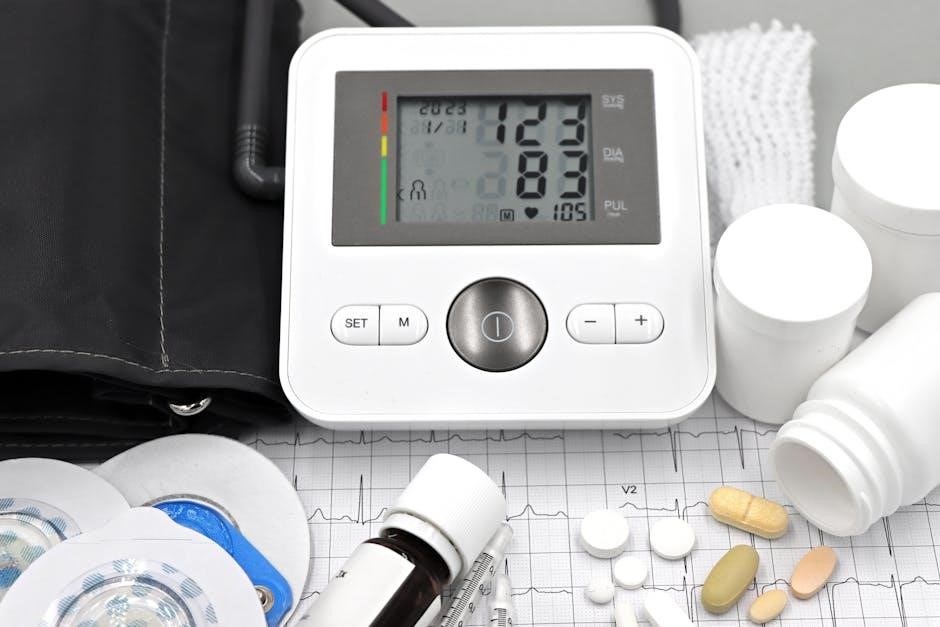
Ambulatory Blood Pressure Monitoring (ABPM) provides a more comprehensive assessment of blood pressure over a 24-hour period, offering a valuable alternative to clinic-based measurements. A portable device, worn by the patient, automatically records blood pressure at regular intervals – typically every 30 minutes during the day and hourly at night.
This method helps to mitigate the effects of ‘white coat hypertension’ and masked hypertension, providing a more accurate reflection of a patient’s typical blood pressure profile. NHS guidance emphasizes the importance of patient training for proper device use and diary completion. Results are analyzed, often with reference to standardized NHS blood pressure charts – frequently accessible as PDFs – to determine average daytime, nighttime, and overall blood pressure values, guiding clinical decision-making and treatment strategies.
Home Blood Pressure Monitoring (HBPM)
Home Blood Pressure Monitoring (HBPM) empowers patients to actively participate in managing their hypertension. It involves regular blood pressure measurements taken in the familiar environment of their own home, using a validated blood pressure monitor. The NHS recommends HBPM as a valuable tool for confirming a diagnosis and assessing treatment effectiveness.
Patients are typically advised to take multiple readings – often morning and evening for seven days – and record them. These readings are then averaged, and compared against NHS guidelines, often visualized using readily available PDF blood pressure charts. Accurate technique is crucial; the NHS provides resources on proper measurement procedures. HBPM data assists clinicians in tailoring treatment plans and provides patients with a greater understanding of their condition.

Interpreting Blood Pressure Readings
NHS blood pressure charts, frequently in PDF format, help individuals and healthcare professionals understand systolic and diastolic values, categorizing risk levels accurately.
Systolic vs. Diastolic Pressure
Understanding the difference between systolic and diastolic pressure is fundamental when interpreting NHS blood pressure charts, often accessed as a PDF document. Systolic pressure, the higher number, reflects the force when your heart beats, pushing blood around the body. Diastolic pressure, the lower number, measures the pressure in your arteries when your heart rests between beats.
NHS charts clearly delineate these values. Elevated systolic pressure, even with normal diastolic readings, can indicate increased cardiovascular risk, particularly in older adults. Conversely, high diastolic pressure suggests increased resistance in the arteries. Accurate PDF chart interpretation requires recognizing both values and their combined significance. Monitoring both provides a comprehensive view of cardiovascular health, guiding appropriate management strategies as outlined by NHS guidelines.
Average Blood Pressure Calculation
Calculating an average blood pressure is vital for accurate assessment, especially when utilizing NHS blood pressure charts – frequently available in PDF format – and monitoring over time. The NHS recommends multiple readings, ideally taken at different times of day, to minimize the impact of temporary fluctuations. For clinic readings, averaging several measurements during a single visit is standard practice.
When using Home Blood Pressure Monitoring (HBPM), as detailed in NHS guidance and often illustrated in PDF resources, averaging readings taken over seven days provides a more reliable representation. Ambulatory Blood Pressure Monitoring (ABPM) automatically calculates a 24-hour average. This averaged value, rather than a single reading, is crucial for diagnosis and treatment decisions, ensuring a comprehensive and accurate assessment of cardiovascular health.
Factors Affecting Blood Pressure Readings
Numerous factors can influence blood pressure, impacting the interpretation of readings found on NHS blood pressure charts – often accessible as PDF downloads. Stress, anxiety, and recent physical activity can temporarily elevate readings. Caffeine and nicotine consumption also contribute to increases. Conversely, dehydration and certain medications can lower blood pressure.
White coat hypertension, where readings are higher in a clinical setting, is a common phenomenon. Proper measurement technique, as outlined in NHS guidelines and detailed in PDF resources, is crucial. Individual factors like age, ethnicity, and underlying health conditions also play a role. Recognizing these influences ensures accurate assessment and appropriate management, preventing misdiagnosis based solely on a single reading.

NHS Guidelines for Hypertension Management
NHS guidelines, often detailed in downloadable PDF formats, emphasize early detection, lifestyle changes, and, when necessary, pharmacological interventions for effective hypertension control.
Initial Assessment and Diagnosis
The NHS initial assessment for hypertension frequently utilizes readily available PDF blood pressure charts to categorize readings. Clinic blood pressure measurement forms the first step, but confirmation often requires Ambulatory Blood Pressure Monitoring (ABPM) or Home Blood Pressure Monitoring (HBPM). These methods, guided by NHS protocols detailed in downloadable resources, provide a more comprehensive picture.
Urine dipstick tests and clinical examinations are standard, alongside reviewing a patient’s medical history and lifestyle factors. Accurate categorization, using NHS defined ranges found in PDF guidelines, is vital. Stage 1 or 2 hypertension diagnosis relies on consistent elevated readings, confirmed by repeat measurements and averaged according to NHS recommendations outlined in accessible PDF documents. Early and accurate diagnosis, supported by these resources, is key to effective management.
Lifestyle Modifications for Lowering Blood Pressure
NHS guidelines, often detailed in downloadable PDF charts and resources, strongly emphasize lifestyle changes as a first-line approach to managing hypertension; These include adopting a healthier diet – reducing salt intake and increasing fruit and vegetable consumption. Regular physical activity, aiming for at least 150 minutes of moderate-intensity exercise weekly, is also crucial, as detailed in NHS PDF guides.
Maintaining a healthy weight, limiting alcohol consumption, and quitting smoking are further key recommendations, all supported by information within NHS resources. Stress management techniques, such as mindfulness or yoga, can also contribute. Regularly monitoring blood pressure at home, using charts available as PDF downloads, helps individuals track progress and stay motivated towards achieving healthier blood pressure levels.
Pharmacological Treatment Options
When lifestyle modifications, detailed in NHS PDF guides, prove insufficient, pharmacological intervention becomes necessary. NHS guidelines, often accessible as downloadable PDF documents, outline various medication classes used to manage hypertension. These commonly include ACE inhibitors or angiotensin II receptor blockers (ARBs), thiazide or loop diuretics, and calcium channel blockers.
Beta-blockers may also be prescribed, particularly in specific patient groups. Treatment is individualized, considering factors like age, ethnicity, and co-existing conditions, as highlighted in NHS resources. Regular monitoring, using blood pressure charts often available as PDFs, is vital to assess treatment effectiveness and adjust dosages accordingly. NHS PDFs emphasize adherence to prescribed medication regimens for optimal blood pressure control.

Accessing NHS Blood Pressure Charts (PDF Format)
NHS blood pressure charts in PDF format are readily available on official NHS websites and through trusted third-party healthcare resources for convenient access.
Official NHS Websites for Downloads
Finding reliable NHS blood pressure charts in PDF format begins with exploring the official NHS digital resources. The NHS website (www.nhs.uk) serves as a primary hub, often linking to specific guidance documents and downloadable charts related to hypertension management.
Specifically, searching for “blood pressure chart PDF” or “hypertension guidelines PDF” on the NHS site will yield relevant results. Additionally, NHS Choices, now integrated within the main NHS website, previously hosted a wealth of information, including downloadable resources.
Furthermore, individual NHS Trusts may also publish their own localized blood pressure monitoring charts or guidance documents on their respective websites, tailored to their specific patient populations and protocols. Always prioritize downloads directly from official NHS domains to ensure accuracy and validity.
Reliable Third-Party Resources
While official NHS sources are paramount, several reputable organizations offer supplementary blood pressure charts and information, often in PDF format. The British and Irish Hypertension Society (BIHS) provides evidence-based resources for both healthcare professionals and the public, including downloadable materials related to blood pressure targets and monitoring.
Heart UK, a charity dedicated to cardiovascular health, also offers accessible information and potentially downloadable charts focused on managing blood pressure as part of a broader heart-healthy lifestyle.
However, it’s crucial to verify that any third-party chart aligns with current NHS guidelines. Always cross-reference information with the official NHS website to ensure consistency and accuracy before relying on downloaded resources for self-management or interpretation.
Understanding Chart Variations
NHS blood pressure charts, even in PDF format, can exhibit slight variations depending on the specific guidance they represent – for instance, charts tailored for general adult populations versus those for individuals with diabetes or older adults. Some charts may emphasize clinic readings, while others prioritize home or ambulatory monitoring averages.
It’s essential to identify the chart’s intended use and the measurement method it reflects. Different charts might present blood pressure categories using slightly different thresholds, though generally adhering to NHS standards.
Always confirm the date of the PDF to ensure it reflects the most up-to-date NHS guidelines, as recommendations can evolve. Understanding these nuances ensures accurate interpretation and appropriate action.

Blood Pressure Charts for Specific Populations
NHS PDF charts offer tailored guidance for diverse groups—diabetes patients, older adults, and pregnant women—adjusting blood pressure targets for optimal health outcomes.
Blood Pressure Targets for People with Diabetes
NHS guidance, often detailed within downloadable PDF blood pressure charts, specifies lower target blood pressure levels for individuals with diabetes due to their increased cardiovascular risk. Generally, the target blood pressure for those with diabetes is below 130/80 mmHg, although this can be individualized based on overall health and other factors.
These PDF resources emphasize the importance of tighter blood pressure control to protect against diabetic nephropathy (kidney disease) and retinopathy (eye damage). The charts clearly outline the recommended thresholds for initiating lifestyle modifications and pharmacological interventions. Healthcare professionals utilize these charts to collaboratively set personalized goals with patients, ensuring optimal management of both diabetes and hypertension. Accessing these NHS PDF charts empowers patients to actively participate in their care and understand their specific blood pressure targets.
Blood Pressure Management in Older Adults
NHS blood pressure charts, frequently available as PDF documents, acknowledge that managing hypertension in older adults requires a nuanced approach. While a target below 130/80 mmHg is often cited, NHS guidance, detailed in these PDFs, suggests a more individualized strategy for those over 80.
For this demographic, a slightly higher target – up to 150/90 mmHg – may be acceptable, prioritizing avoiding falls due to orthostatic hypotension (a sudden drop in blood pressure upon standing). The PDF charts emphasize careful titration of medications and regular monitoring. These resources help clinicians balance cardiovascular protection with quality of life, considering frailty and co-morbidities. Accessing these NHS PDFs ensures healthcare providers implement age-appropriate blood pressure management strategies.
Blood Pressure Considerations During Pregnancy
NHS blood pressure charts, often distributed as PDFs, highlight the critical importance of blood pressure monitoring throughout pregnancy. Gestational hypertension, developing after 20 weeks, and pre-eclampsia, characterized by high blood pressure and protein in the urine, require careful management guided by these resources.
NHS PDF charts detail specific blood pressure thresholds triggering intervention during pregnancy, typically lower than those for non-pregnant adults. Early detection, facilitated by these charts, is vital to prevent complications for both mother and baby. The PDFs emphasize frequent monitoring, particularly in the third trimester, and outline appropriate treatment pathways. Accessing these NHS resources ensures healthcare professionals adhere to evidence-based guidelines for optimal maternal and fetal outcomes, utilizing the detailed information within the PDF format.
Resources and Further Information
NHS websites offer downloadable PDF blood pressure charts, while organizations like BIHS and Heart UK provide supplementary information and guidance on hypertension.
British and Irish Hypertension Society (BIHS)
The British and Irish Hypertension Society (BIHS) stands as a pivotal resource for both healthcare professionals and the public seeking in-depth knowledge about hypertension and blood pressure management. While they don’t directly host downloadable NHS blood pressure chart PDFs, their website provides comprehensive guidelines, research findings, and educational materials that complement the charts.
BIHS actively promotes best practices in blood pressure measurement, aligning with NHS standards, and offers resources on interpreting readings accurately. They frequently publish updates on hypertension management, including the latest clinical guidelines and pharmacological advancements. Exploring their publications can enhance understanding of the categories defined within NHS blood pressure charts, and support informed discussions with healthcare providers regarding individual blood pressure targets and treatment plans. The BIHS website is a valuable adjunct to utilizing NHS provided charts.
Heart UK
Heart UK, a leading charity dedicated to fighting heart disease, offers valuable information relating to blood pressure and cardiovascular health, though they don’t directly provide NHS blood pressure chart PDF downloads. Their resources focus on the broader context of heart health, explaining how high blood pressure contributes to various cardiovascular conditions and the importance of early detection and management.
Heart UK provides accessible explanations of blood pressure categories, mirroring those found on NHS charts, and details lifestyle modifications to lower blood pressure. They emphasize the link between cholesterol levels and blood pressure, offering guidance on diet and exercise. While not a direct source for the charts themselves, Heart UK’s educational materials significantly enhance understanding of the information presented within an NHS blood pressure chart, empowering individuals to take control of their heart health.
NHS Choices, Blood Pressure
NHS Choices, now integrated into the broader NHS website, serves as a primary online resource for health information, including comprehensive details about blood pressure. While direct PDF downloads of standardized NHS blood pressure charts are not always prominently featured, the site provides detailed explanations of blood pressure readings, categories, and the associated health risks.
The NHS website offers guidance on understanding your blood pressure numbers, interpreting what they mean, and when to seek medical advice. It links to information about ABPM and HBPM, crucial for accurate readings. Though a single, downloadable chart PDF isn’t always available, the NHS website effectively replicates the information contained within such charts, offering a user-friendly and accessible alternative for managing your cardiovascular health;