
-
By:
- elizabeth
- No comment
the cell cycle worksheet answer key pdf
Cell cycle worksheets, often with answer keys in PDF format, are vital tools for students learning about cellular reproduction and growth.
These resources aid comprehension of complex biological processes, like mitosis and cytokinesis, offering practice identifying stages and understanding key concepts.
Worksheets reinforce learning, preparing students for assessments and deeper exploration of cell biology principles, including the intricacies of interphase.
What is a Cell Cycle Worksheet?
A cell cycle worksheet is a learning resource designed to help students grasp the intricacies of the cell cycle – the series of events that take place in a cell leading to its division and duplication. These worksheets typically present a variety of question types, including labeling diagrams of mitosis stages (prophase, metaphase, anaphase, telophase), identifying phases based on descriptions, and answering conceptual questions about DNA replication during the S phase.
Frequently, these worksheets are accompanied by an answer key, often available as a PDF document for easy access and self-assessment. The PDF format ensures consistent formatting across different devices. Worksheets often cover topics like interphase (G1, S, and G2 phases) and the final stage, cytokinesis, detailing processes like cleavage furrow formation in animal cells and cell plate formation in plant cells.
They serve as a practical application of theoretical knowledge, solidifying understanding of cell growth, division, and regulation.
Why Use a Cell Cycle Worksheet?
Utilizing a cell cycle worksheet offers numerous pedagogical benefits. They provide students with focused practice, reinforcing concepts like chromosome condensation in prophase and the importance of accurate DNA replication during the S phase. Worksheets actively engage students, moving beyond passive learning and promoting deeper understanding of complex processes like mitosis and cytokinesis.
The availability of an answer key, often in PDF format, allows for immediate self-assessment, identifying areas needing further review. This fosters independent learning and encourages students to take ownership of their understanding. Worksheets help students visualize the cell cycle, particularly the stages of mitosis, and understand the role of structures like the spindle and centrioles.
They are invaluable tools for teachers to gauge student comprehension and tailor instruction accordingly, ensuring mastery of fundamental cell biology principles.

The Cell Cycle: An Overview
The cell cycle, explored via worksheets and answer keys (PDF), comprises interphase and the mitotic (M) phase, ensuring accurate cell division and growth.
Phases of the Cell Cycle
Cell cycle worksheets, frequently accompanied by a PDF answer key, typically focus on the distinct phases governing cell growth and division. These phases are broadly categorized into Interphase and the Mitotic (M) phase. Interphase, a preparatory period, is further subdivided into G1, S, and G2 phases, crucial for growth, DNA replication, and final preparations for mitosis.
The M phase encompasses mitosis – nuclear division – and cytokinesis – cytoplasmic division. Worksheets often require students to identify stages within mitosis: prophase (chromosome condensation), metaphase (alignment), anaphase (separation), and telophase (reformation). Understanding the sequential order and events within each phase, often verified using the answer key PDF, is fundamental to grasping the cell cycle’s overall process. Accurate identification of these phases is a common assessment point.
Interphase: Preparation for Division
Cell cycle worksheets, often utilizing a PDF answer key for verification, dedicate significant attention to Interphase, the longest phase of the cell cycle. This period isn’t simply “rest”; it’s a crucial stage of preparation for cell division. Students learn Interphase comprises G1, S, and G2 phases, each with distinct roles.
Worksheets emphasize that G1 involves cell growth and normal functions, while the S phase is dedicated to DNA replication – a process frequently assessed with questions requiring understanding of base pairing and accurate duplication. G2 focuses on further growth and final preparations for mitosis. The answer key PDF helps students confirm their understanding of the events occurring within each sub-phase of Interphase, ensuring they grasp the importance of this preparatory stage before division begins.
G1 Phase: Growth and Normal Function
Cell cycle worksheets, frequently accompanied by a PDF answer key, thoroughly explore the G1 phase as a period of active cell growth and fulfilling normal cellular functions. Students utilizing these resources learn that during G1, the cell increases in size, synthesizes proteins and organelles, and carries out its specialized tasks.
Worksheet questions often assess understanding of how G1 is a checkpoint where the cell evaluates conditions for division. The answer key PDF provides clarity on whether sufficient resources are available and if the DNA is undamaged before proceeding. Students practice identifying G1 as a vital preparatory stage, ensuring the cell is adequately equipped for the subsequent S phase and eventual division. Comprehension of G1’s role is crucial for understanding the entire cell cycle.
S Phase: DNA Replication
Cell cycle worksheets, often including a detailed answer key PDF, dedicate significant attention to the S phase – the critical stage of DNA replication. Students learn that during this phase, the cell duplicates its entire genome, ensuring each daughter cell receives a complete set of genetic instructions.
Worksheet exercises frequently focus on the mechanisms of DNA replication, including the roles of enzymes and the semi-conservative nature of the process. The answer key PDF clarifies concepts like the unwinding of the DNA double helix and the accurate pairing of nucleotides. Students practice identifying the importance of error-checking mechanisms during replication to maintain genetic integrity. Understanding the S phase is fundamental to grasping how genetic information is passed on during cell division, and worksheets reinforce this knowledge.
G2 Phase: Further Growth and Preparation
Cell cycle worksheets, frequently accompanied by a comprehensive answer key PDF, highlight the G2 phase as a period of crucial preparation for mitosis. This phase involves continued cell growth and the synthesis of proteins and organelles necessary for cell division.
Worksheet questions often assess understanding of the G2 checkpoint, a critical control point ensuring DNA replication is complete and any damage is repaired before the cell enters mitosis. The answer key PDF provides detailed explanations of the checkpoint mechanisms and their importance in preventing errors. Students practice identifying the events occurring in G2, such as chromosome condensation initiation and spindle fiber assembly preparation. Mastering the G2 phase is essential for comprehending the cell’s commitment to division and the safeguards in place to ensure accurate replication.

Mitosis: Nuclear Division
Mitosis, detailed in cell cycle worksheets and their answer key PDFs, is the process of nuclear division, creating two identical daughter nuclei from a single parent nucleus.
Prophase: Chromosome Condensation
Prophase, a crucial stage detailed in cell cycle worksheets and clarified by their answer key PDFs, marks the beginning of visible changes within the nucleus. During this phase, chromatin, the loosely packed DNA, undergoes condensation, becoming distinctly visible as chromosomes.
Worksheets often require students to identify this key event, recognizing the transformation from diffuse chromatin to compact, rod-like structures. Simultaneously, the nuclear envelope begins to break down, and the centrioles (in animal cells) start to separate, moving towards opposite poles of the cell.
A spindle apparatus, composed of microtubules, begins to form, essential for later chromosome movement. Understanding these events is frequently assessed on worksheets, with answer keys providing confirmation of correct identification of prophase characteristics.
Students must grasp the significance of chromosome condensation for proper segregation during subsequent mitotic phases.
Metaphase: Chromosome Alignment
Metaphase, a critical stage frequently assessed on cell cycle worksheets and verified with answer key PDFs, is characterized by the precise alignment of chromosomes. Following prophase, the condensed chromosomes migrate towards the metaphase plate – an imaginary plane equidistant between the two poles of the cell.
Worksheets often task students with identifying metaphase based on this distinct arrangement. The spindle fibers, emanating from the centrioles, attach to the centromeres of each chromosome, ensuring proper alignment. This precise positioning is vital for equal distribution of genetic material to daughter cells.
Correct identification of metaphase relies on recognizing the chromosomes lined up centrally, a feature clearly illustrated in worksheet diagrams and confirmed by answer keys. Understanding this stage is fundamental to grasping the mechanics of cell division.
Worksheets emphasize the importance of this alignment for accurate chromosome segregation.
Anaphase: Chromosome Separation
Anaphase, a key stage often featured on cell cycle worksheets and validated by answer key PDFs, marks the separation of sister chromatids. Following metaphase, the centromeres divide, and the spindle fibers shorten, pulling the identical chromatids towards opposite poles of the cell.
Worksheets commonly assess students’ ability to distinguish anaphase from other mitotic phases by recognizing this distinct movement. Each chromatid now functions as an individual chromosome, ensuring each daughter cell receives a complete set of genetic information.
Accurate identification of anaphase, confirmed by worksheet answer keys, relies on observing the chromosomes moving towards the poles. This stage is crucial for maintaining genetic stability during cell division.
Worksheets often include diagrams requiring students to label the separating chromatids and spindle fibers.
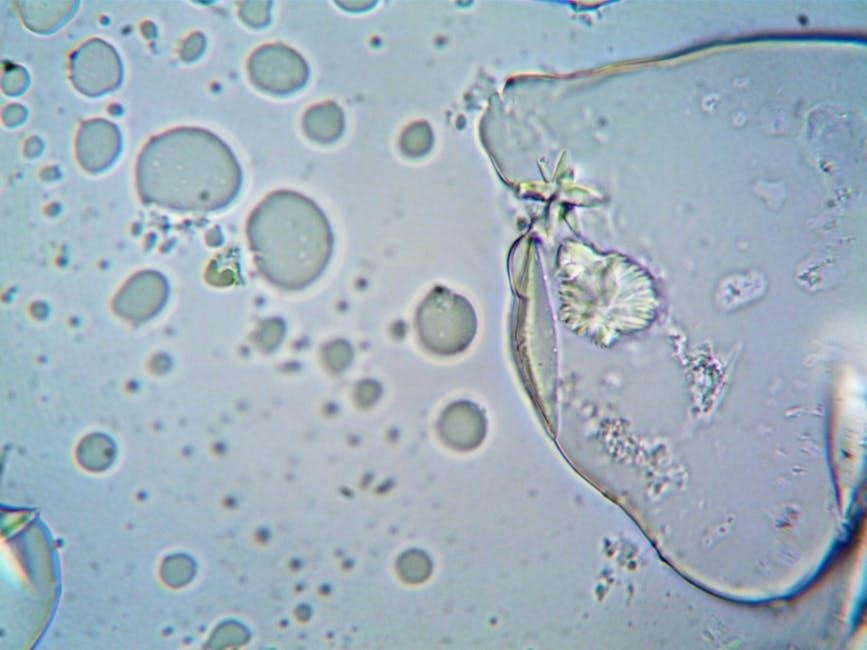
Telophase: Nuclear Reformation
Telophase, frequently assessed on cell cycle worksheets with corresponding answer key PDFs, signifies the final stage of nuclear division. During telophase, chromosomes arrive at the poles of the cell and begin to decondense, returning to their less compact chromatin form.
The nuclear envelope reforms around each set of chromosomes, creating two distinct nuclei. Spindle fibers disassemble, and the nucleolus reappears within each new nucleus. Worksheets often test students’ understanding of these events through labeling exercises and multiple-choice questions.
Correctly identifying telophase, as verified by answer keys, demonstrates comprehension of the complete mitotic process. This stage prepares the cell for cytokinesis, the division of the cytoplasm.
Worksheets emphasize the reversal of prophase events during telophase.
Cytokinesis: Cytoplasmic Division
Cytokinesis, often detailed in cell cycle worksheets and their answer key PDFs, completes cell division by dividing the cytoplasm, forming two daughter cells.
Worksheets illustrate this process.
Animal Cell Cytokinesis: Cleavage Furrow Formation
Animal cell cytokinesis, frequently assessed on cell cycle worksheets with accompanying answer key PDFs, involves a distinct mechanism compared to plant cells. The process begins with the formation of a cleavage furrow, an indentation of the cell surface.
This furrow develops as a contractile ring composed of actin and myosin filaments assembles beneath the plasma membrane. The ring progressively constricts, pinching the cell inwards, much like tightening a drawstring. Worksheets often include diagrams requiring students to identify this furrow and its components.
Understanding the role of actin and myosin is crucial, and answer keys provide correct labeling and explanations. The furrow deepens until the parent cell is divided into two separate, genetically identical daughter cells. PDF resources often highlight the dynamic nature of this process and its dependence on the cytoskeleton.
Plant Cell Cytokinesis: Cell Plate Formation
Plant cell cytokinesis, a key topic on cell cycle worksheets and detailed in answer key PDFs, differs significantly from animal cell division. Instead of a cleavage furrow, plant cells construct a cell plate.
Vesicles derived from the Golgi apparatus, filled with cell wall materials, migrate to the middle of the dividing cell. These vesicles fuse, forming the cell plate, which grows outwards towards the existing cell walls. Worksheet questions frequently ask students to describe this vesicle transport and fusion process.
The answer keys emphasize that the cell plate eventually becomes the new cell wall separating the two daughter cells. Understanding the role of the Golgi and the composition of the cell wall is vital. PDF resources often include diagrams illustrating the formation and expansion of the cell plate, aiding visual comprehension.

Understanding Cell Cycle Regulation
Cell cycle regulation, covered in worksheets and answer key PDFs, ensures accurate DNA replication and division, preventing errors and uncontrolled growth.
These resources detail checkpoints and the roles of cyclins and CDKs.
Checkpoints in the Cell Cycle
Cell cycle checkpoints, frequently assessed on worksheets with accompanying answer key PDFs, are critical control mechanisms ensuring the fidelity of cell division. These checkpoints—G1, G2, and M—act as quality control stations, verifying conditions are suitable for progression.
Worksheets often task students with identifying the purpose of each checkpoint; for example, the G1 checkpoint assesses DNA damage before replication, while the G2 checkpoint confirms successful replication. The M checkpoint (or spindle checkpoint) ensures proper chromosome alignment during mitosis.
Understanding these checkpoints, as detailed in the PDF answer keys, is crucial because failures can lead to mutations and uncontrolled cell growth, potentially resulting in cancer. Worksheets emphasize the importance of these regulatory mechanisms in maintaining genomic stability.
Role of Cyclins and Cyclin-Dependent Kinases (CDKs)
Cyclins and Cyclin-Dependent Kinases (CDKs) are central to cell cycle control, a topic frequently covered in cell cycle worksheets and their corresponding answer key PDFs. CDKs are enzymes that become active only when bound to cyclin proteins.

Different cyclin-CDK complexes trigger specific phases of the cell cycle. Worksheets often require students to match cyclin-CDK combinations to their respective phases (G1, S, G2, M). The concentration of cyclins fluctuates throughout the cycle, driving CDK activity and progression.
PDF answer keys typically illustrate how these proteins regulate key events like DNA replication and mitosis. Understanding this regulatory system is vital, as disruptions can lead to uncontrolled cell division, and worksheets reinforce this concept.

Common Questions on Cell Cycle Worksheets
Cell cycle worksheets, alongside their answer key PDFs, frequently test students on identifying mitosis stages and grasping DNA replication’s crucial importance.
These questions assess comprehension of cellular division processes.
Identifying Stages of Mitosis
Cell cycle worksheets often heavily emphasize the accurate identification of stages within mitosis – prophase, metaphase, anaphase, and telophase – and answer key PDFs are essential for self-assessment.
Students commonly struggle with differentiating these phases visually, particularly recognizing chromosome condensation in prophase and alignment during metaphase.
Worksheet questions frequently present microscopic images of cells, requiring students to determine the mitotic stage based on observable characteristics like chromosome positioning and the presence or absence of a nuclear envelope.
Understanding the sequence of events is also critical; a correct answer key PDF will reinforce this order.
Many worksheets include diagrams to label, further testing knowledge of each stage’s defining features. Correctly identifying these stages demonstrates a solid grasp of cellular division.
The answer key PDF provides a valuable tool for verifying understanding and pinpointing areas needing further study.
Understanding the Importance of DNA Replication
Cell cycle worksheets consistently highlight DNA replication during the S phase, and a comprehensive answer key PDF is crucial for confirming comprehension of its significance.
Students must grasp that accurate DNA replication is paramount for ensuring each daughter cell receives a complete and identical copy of the genetic material.
Worksheet questions often explore the consequences of errors during replication, linking them to mutations and potential cellular dysfunction.
Understanding the role of enzymes involved in replication, like DNA polymerase, is frequently assessed.
The answer key PDF clarifies the process, showing how the double helix unwinds and new strands are synthesized, emphasizing the semi-conservative nature of replication.
Worksheets may also ask about the timing of replication within the cell cycle, reinforcing its position before mitosis. A detailed answer key PDF is invaluable for mastering this fundamental concept.

Where to Find Cell Cycle Worksheet Answer Keys (PDF)
Cell cycle worksheet answer keys (PDF) are readily available on numerous online educational platforms and often accompany textbook materials for student support.
Online Educational Resources
Numerous websites specialize in providing free educational resources, including cell cycle worksheets and their corresponding answer keys in PDF format. Platforms like Khan Academy, Biology Corner, and various teacher-created resource sharing sites (such as Teachers Pay Teachers) frequently host these materials.
A simple online search using keywords like “cell cycle worksheet answer key PDF” will yield a plethora of results. However, it’s crucial to evaluate the source’s credibility before relying on the provided answers. Look for resources from reputable educational institutions or experienced educators.
Many websites offer interactive quizzes and practice problems alongside the worksheets, allowing students to self-assess their understanding. These resources often include detailed explanations for each answer, fostering a deeper comprehension of the cell cycle’s intricacies. Remember to always cross-reference information and utilize multiple sources for a well-rounded learning experience.
Textbook Companion Websites
Many modern biology textbooks offer companion websites designed to supplement classroom learning. These sites frequently include downloadable resources such as cell cycle worksheets, practice quizzes, and, importantly, answer keys in PDF format, often password-protected for student access.
Access to these materials typically requires a student to register using a code found within the textbook itself. These resources are specifically aligned with the textbook’s content, ensuring consistency and reinforcing the concepts presented in the chapters.
Companion websites often provide additional learning tools like interactive animations illustrating mitosis and cytokinesis, further aiding comprehension. Checking your textbook’s website is a reliable way to find accurate and relevant worksheets and their corresponding answer keys, designed to support your studies.
Troubleshooting Worksheet Problems
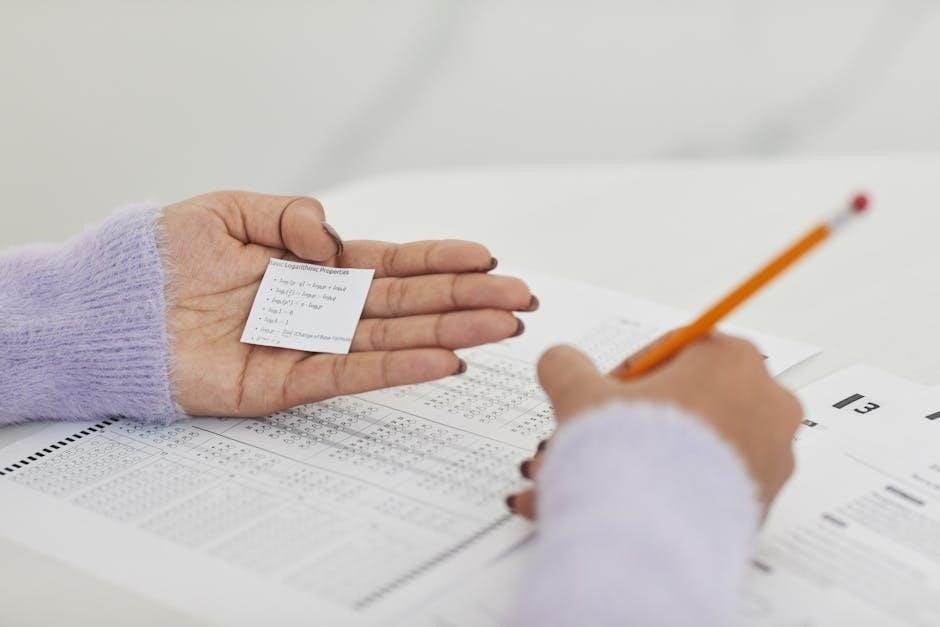
If struggling with a cell cycle worksheet, referencing the answer key PDF can pinpoint errors. Reviewing explanations clarifies misunderstandings of mitosis stages.
Carefully compare your work!
Common Mistakes Students Make
Frequently, students misidentify phases of mitosis when using a cell cycle worksheet, particularly confusing prophase and metaphase due to similar appearances under a microscope. A cell cycle worksheet answer key PDF can help correct this.
Another common error involves misunderstanding the purpose of each interphase stage (G1, S, and G2), often failing to recognize the critical role of the S phase in DNA replication. Students sometimes struggle with the order of events in mitosis, needing to review the sequence repeatedly.
Incorrectly associating cytokinesis with mitosis is also prevalent; it’s crucial to understand that while occurring alongside, it’s a separate process. Finally, overlooking the significance of checkpoints within the cell cycle, and their regulatory function, leads to incomplete answers. Utilizing a detailed answer key PDF can illuminate these concepts.
Tips for Correctly Answering Questions
When tackling a cell cycle worksheet, carefully read each question before attempting an answer, and utilize a cell cycle worksheet answer key PDF for verification. Diagrams are your friend – label phases accurately and understand what’s happening at each stage.
Focus on the key events defining each phase of mitosis (prophase, metaphase, anaphase, telophase) and interphase (G1, S, G2). Remember that DNA replication occurs specifically during the S phase.
Pay close attention to the differences between mitosis in animal and plant cells, particularly regarding cytokinesis. Don’t rush; take time to visualize the processes. Cross-reference your answers with reliable sources, and if unsure, consult the answer key PDF to solidify your understanding of the cell cycle.